
7 Online Business Ideas You Can Launch This Weekend
If you want to start an online business but cannot decide what to build, the choice itself is usually the obstacle. This list is for that situation. Each of these online business ideas you can start this weekend passes one test: can a beginner with no audience and no budget get a real, live version online in two days?
Every idea comes with a Saturday and Sunday plan and an honest note on how it could earn. Affiliate marketing, where you earn a commission when someone buys through your link, shows up in several of them because it adds income to work you are already publishing.
What “launch” realistically means in one weekend
Launching in a weekend means something small is public and working by Sunday night. A page exists, a person could find it, and there is a clear next action for a visitor. That is all.
It does not mean you have customers, traffic or income by Monday. Most new online projects start with almost no visitors, and money tends to follow consistent publishing rather than a launch day. The weekend gets you past the hardest point, which is having nothing live.
A weekend launch should include these things:
- One topic or offer, described in a single sentence
- A live page, product or channel that a stranger can open
- One piece of useful content or one clear offer on it
- A way to contact you or follow you
If you want a fuller list of what a new online business needs, the starting your own online business checklist covers it in detail. This article stays with the idea itself.
Idea 1 and 2: Start a niche affiliate website and a how-to blog
These two overlap so much that they are often the same site, so they share a section.

Idea 1: A niche affiliate website
A niche affiliate website focuses on one narrow subject and recommends products within it. The narrower the subject, the easier it is to know what readers want. “Home coffee brewing for beginners” gives you more to say than “kitchen gadgets.”
Saturday: Choose the niche and a site name, set up the website, and write your first useful article, such as a beginner’s guide to the topic. Sunday: Write a second article that compares or explains two or three products you can speak about honestly, and add an About page that says who the site is for.
How it could earn: Affiliate commissions when readers buy through your links. Join the affiliate programs of the products you actually recommend, and disclose your links to readers. Income depends on traffic, and traffic takes time, so treat the first months as building.
Idea 2: A how-to blog
A how to blog answers specific questions in your chosen area. Titles like “How to repot a root-bound houseplant” attract people who are searching for exactly that answer.
Saturday: Pick a topic you can explain clearly and list ten questions a beginner would ask. Set up the blog and write the answer to the first one. Sunday: Write the second answer, link the two together, and publish both.
How it could earn: Affiliate links to tools or materials mentioned inside the tutorials, and later display advertising or your own products. The how to format works well with affiliate marketing because the product recommendation fits naturally inside the instructions.
For guidance on choosing the topic, why the right niche matters for your business explains how to narrow down.
Idea 3 and 4: Sell a simple digital product and a printable template pack
Digital products have no shipping and no stock, and you make them once. The catch is that someone has to find them, so the product has to solve one specific, small problem.
Idea 3: A simple digital product
This could be a short guide, a checklist, a cheat sheet or a mini workbook. The best ones save the buyer an hour or answer one question completely. “A one-page packing checklist for first-time campers” is a product. “Everything about camping” is not.
Saturday: Decide on the single problem it solves, outline it, and write or build the content in a document. Export it as a PDF. Sunday: Set up a simple sales page that names the problem, shows what is inside, and links to where it can be bought or downloaded. Publish it.
How it could earn: Direct sales of the product. You set the price, so decide it by comparing similar products rather than guessing. You can also add affiliate links inside the guide to tools it mentions, as long as you disclose them.
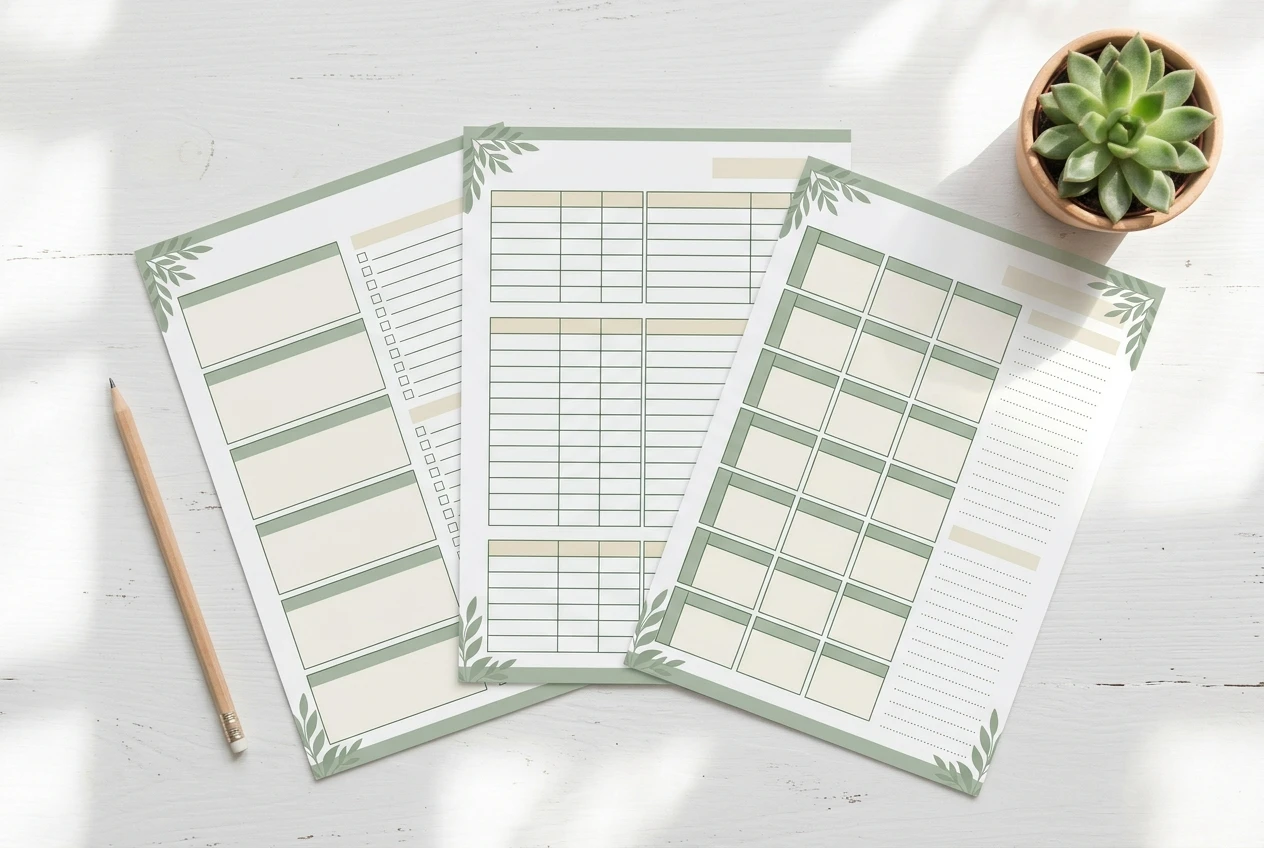
Idea 4: A printable template pack
A template pack is a set of related printable or editable pages: a weekly planner, a budget tracker, a meal plan sheet, a lesson planning page. Buyers print them or fill them in on a screen.
Saturday: Choose one audience, such as teachers or new parents, and design three to five matching pages in a design tool or word processor. Keep the style consistent. Sunday: Make preview images, write a clear description of what is included and how to use the files, and publish the listing.
How it could earn: Sales of the pack, with the option to add more packs for the same audience over time. Image creation can be done inside Wealthy Affiliate, and the post on creating images quickly with Image Studio shows how that works for previews and graphics.
Idea 5: Offer a freelance service built on a skill you already have
A freelance service sells your time or your result to a client. It is the one idea on this list that can earn before you have any audience, because it needs only one buyer.
The skill does not need to be rare. Proofreading, social media captions, basic graphic design, data entry, bookkeeping help, tutoring, résumé editing and transcription are all services people pay for. Choose one you can already do competently.
Saturday: Define the service in one sentence, including who it is for and what they get. Set up a simple one-page site with the service, a short bio drawn from what you can truthfully say, and a contact form. Sunday: Create two or three samples of the work, publish them on the page, and send the link to people who might need it or know someone who does.
How it could earn: Fees paid by clients. You decide the price, and it helps to check what others charge for similar work before you set it. A freelance service also teaches you what a market wants to pay for, which can inform a later product or affiliate site. Income is limited by your hours, which is the trade-off against products that sell repeatedly.
Idea 6: Launch a short-form video channel around one topic
Short videos let people discover you without a website or an existing following. The topic matters more than the production quality. One subject, such as quick budget meals or beginner guitar chords, gives viewers a reason to follow.

Saturday: Pick the topic, create the channel, write a short bio, and plan five video ideas. Record the first two using your phone and natural light. Sunday: Record and publish three more, keeping each one focused on a single tip or demonstration. Add a link to a page where interested viewers can go next.
How it could earn: Affiliate links to products you show in the videos, placed on a linked page, and later sponsorships or your own products. Platforms differ on where links are allowed, so read the rules of the one you choose. For ideas on the format, see the power of TikTok for small businesses.
The honest limit is that videos need a steady supply. One weekend gets you five, but the channel only grows with continued posting.
Idea 7: Start a newsletter that recommends tools you actually use
A newsletter is an email you send regularly to people who asked for it. This idea only works if you really use the tools you recommend. Readers trust a newsletter because they believe the recommendations are real, and that trust is what you are building.
Saturday: Choose a topic and the type of reader you are writing for. Set up a free account with an email service, create a signup form, and write a welcome message that says what subscribers will receive and how often. Sunday: Write the first issue, such as three tools that help with one specific task, and explain what each does and who it suits. Publish the signup form on a page and share it.
How it could earn: Affiliate commissions on tools you recommend, with disclosure, and later paid subscriptions or your own products. A list starts at zero, so early income is unlikely, and the value comes from building the list over months. A beginner’s overview is in email marketing tips for beginners.
How to pick the one idea that fits you
Choose one idea only. Splitting the weekend across two ideas leaves both unfinished.
Use three questions to decide:
- Time. How many hours can you give this weekend and next week? Videos and newsletters need regular output, while a product can be made once and left.
- Skills. What can you already do without research? A freelance service or a how-to blog draws directly on that.
- Interest. Which topic could you write about for fifty posts? Interest runs out faster than skill, and the project depends on it.
If you have a skill people pay for, start with the freelance service. If you have a topic you enjoy and want income that grows over time, start with the niche affiliate site or the how-to blog. If you prefer to make something once and sell it repeatedly, choose the digital product or the template pack. If you are comfortable on camera, try the video channel, and if you enjoy writing to one reader at a time, try the newsletter.
If you are still unsure, how to start an online business with no experience in 2026 walks through the decision for people at the very beginning.
Your Saturday and Sunday plan for the idea you chose
This plan works for any of the seven. Adjust the details to your idea.
Saturday morning (about two hours): Write your one-sentence description of who the project helps and with what. Pick a name. Set up the place where it will live, whether that is a website, a channel, a listing or an email account.
Saturday afternoon (about three hours): Make the main piece of content or the product itself. Produce one finished item rather than several partial ones. Stop when it is usable, even if it is imperfect.
Sunday morning (about two hours): Make the second piece, or the page that presents the first. Add a clear next action for the visitor, such as “read the guide,” “download the checklist” or “email me about the service.”
Sunday afternoon (about two hours): Check everything on a phone as well as a computer. Fix broken links and typos. Publish, then send the link to a few people and ask what is unclear.
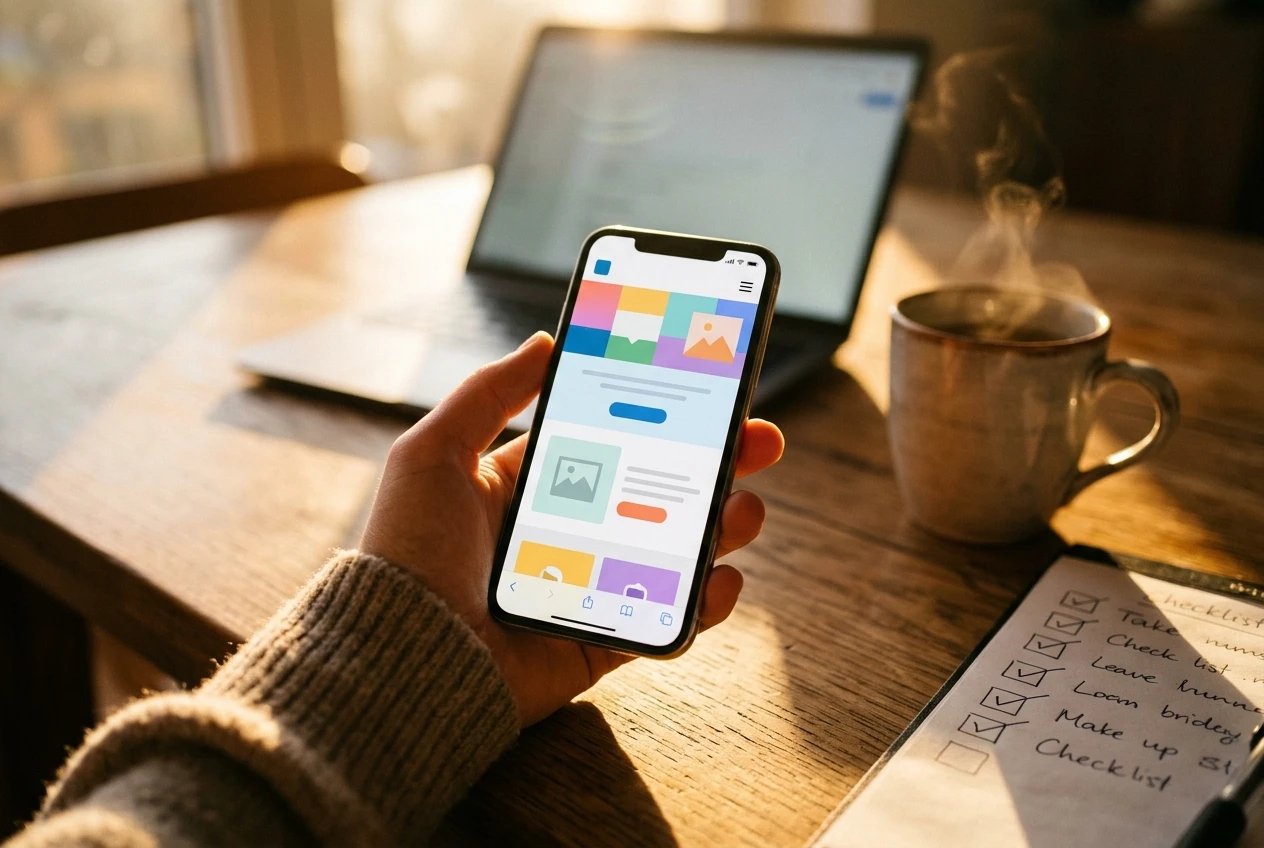
At the end, you should be able to open a link on your phone and see something that is yours. That is the launch.
What to do on Monday so the weekend launch doesn’t stall
Most weekend projects stop on Monday because nothing is scheduled. Spend ten minutes deciding what you will do next and when.
- Set a small recurring goal. One new article, video or newsletter issue per week is enough to keep going. Put the time in your calendar.
- Write down what you learned. Note what took longer than expected and what you would change. This becomes your task list for the coming week.
- Share it once. Send the link to a few people who might benefit and ask for feedback on one question.
- Check your numbers weekly. Look at visits, views, signups or messages. Early numbers will be small, and the point is to see what changes after each piece you publish. Tracking your affiliate marketing performance explains what to look at.
- Plan the next three pieces. A short list of upcoming topics removes the decision of what to make next.
Motivation falls after the first burst. If that happens, staying motivated when working online has practical ways to keep going when progress feels slow.
Start building this weekend
Pick one idea from the list and start building it at Wealthy Affiliate, where you can set up your website and follow training in Learn to take it from weekend launch to real business.
Comments
7 Online Business Ideas You Can Launch This Weekend — No Comments
HTML tags allowed in your comment: <a href="" title=""> <abbr title=""> <acronym title=""> <b> <blockquote cite=""> <cite> <code> <del datetime=""> <em> <i> <q cite=""> <s> <strike> <strong>